The Canada rental market is clearly adjusting after several years of record-high average rent prices increases in Canada. According to the latest National Rent Report from Rentals.ca and Urbanation, the average Canada rent prices across Canada dropped to about $2,057 in early 2026, marking a 31-month low and the 16th consecutive month of annual rent declines.
For renters, the trend offers a rare moment of relief in an otherwise challenging housing market. For landlords and property investors, it signals a shifting market.
This change may require updates to pricing, marketing, and property management plans.
Although rents are still much higher than before the pandemic, the recent slowdown suggests the market may stabilize. This follows years of strong competition and limited housing supply.
A Turning Point in Canada’s Rental Market
Between 2021 and 2023, Canada experienced one of the fastest rent growth periods in decades. Several major factors drove this surge:
- Record immigration and population growth
- Limited housing supply in major cities
- Rising home ownership costs because of higher interest rates
- Delayed home purchases pushing more Canadians into renting
As demand surged and supply lagged behind, rents climbed rapidly across many Canadian cities.
However, the market started changing in 2024. Since then, average rent prices have slowly fallen across the nation. Average rent prices dropped about 6.3% over the past two years. Still, they remain higher than before the pandemic.
This suggests the Canada rental market isn’t collapsing—but rather adjusting after an fleeting growth period.
Why Rents Are Falling in Canada
Several economic and housing trends are working together to bring rent in canada down.
1. A Wave of New Rental Housing
One of the biggest factors is increased housing supply. Canada has recently seen a surge in apartment completions and newly built rental units. As more units come onto the market, competition among landlords increases. When renters have more choices, landlords often need to adjust prices or offer incentives to fill vacancies.
In some cities, landlords are now offering:
- Free rent for the first month
- Reduced security deposits
- Parking or storage incentives
This increased competition helps stabilize rent prices canada.
2. Smaller Unit Sizes Lower Average Rent
Another factor influencing national rent averages is the decreasing size of rental units. The average rental listing size fell to about 857 square feet in early 2026.
Result: A year earlier, the area measured 885 square feet. Two years earlier, the average amount of space was larger, measuring about 943 square feet on average. Because smaller units cost less overall, the shrinking size of apartments contributes to lower average canada rent prices.
Interestingly, when measured by price per square foot, rents are still rising slightly. This suggests that affordability improvements may partly come from smaller living spaces rather than lower pricing per unit size.
3. Slowing Population Growth
Canada’s population continues to grow quickly, but not quite at the record pace seen in recent years.
A slight slowdown in immigration and international student arrivals has reduced pressure on rental demand in some cities.
When demand softens even slightly in previously overheated markets, prices often start stabilizing.
4. Economic Uncertainty
Higher interest rates and inflation have also changed renter behaviour.
Some households are:
- Downsizing to smaller apartments
- Sharing accommodations with roommates
- Staying in their current units longer
This reduces overall demand for new rental units, which can slow rent growth.
Where Rents Are Falling the Most
Not all regions of Canada are experiencing the same trends.
The largest canada rent prices declines are occurring in Canada’s most expensive housing markets.
For example:
- Vancouver rents have dropped significantly year-over-year
- Toronto rents are at their lowest level in nearly four years
- Calgary and Ottawa have also experienced notable declines
Across provinces, the biggest rent decreases were recorded in:
- British Columbia (-4.7%)
- Alberta (-4.3%)
- Ontario (-3.3%)
These markets previously saw some of the fastest rent growth during the housing boom.
Prairie Markets Tell a Different Story
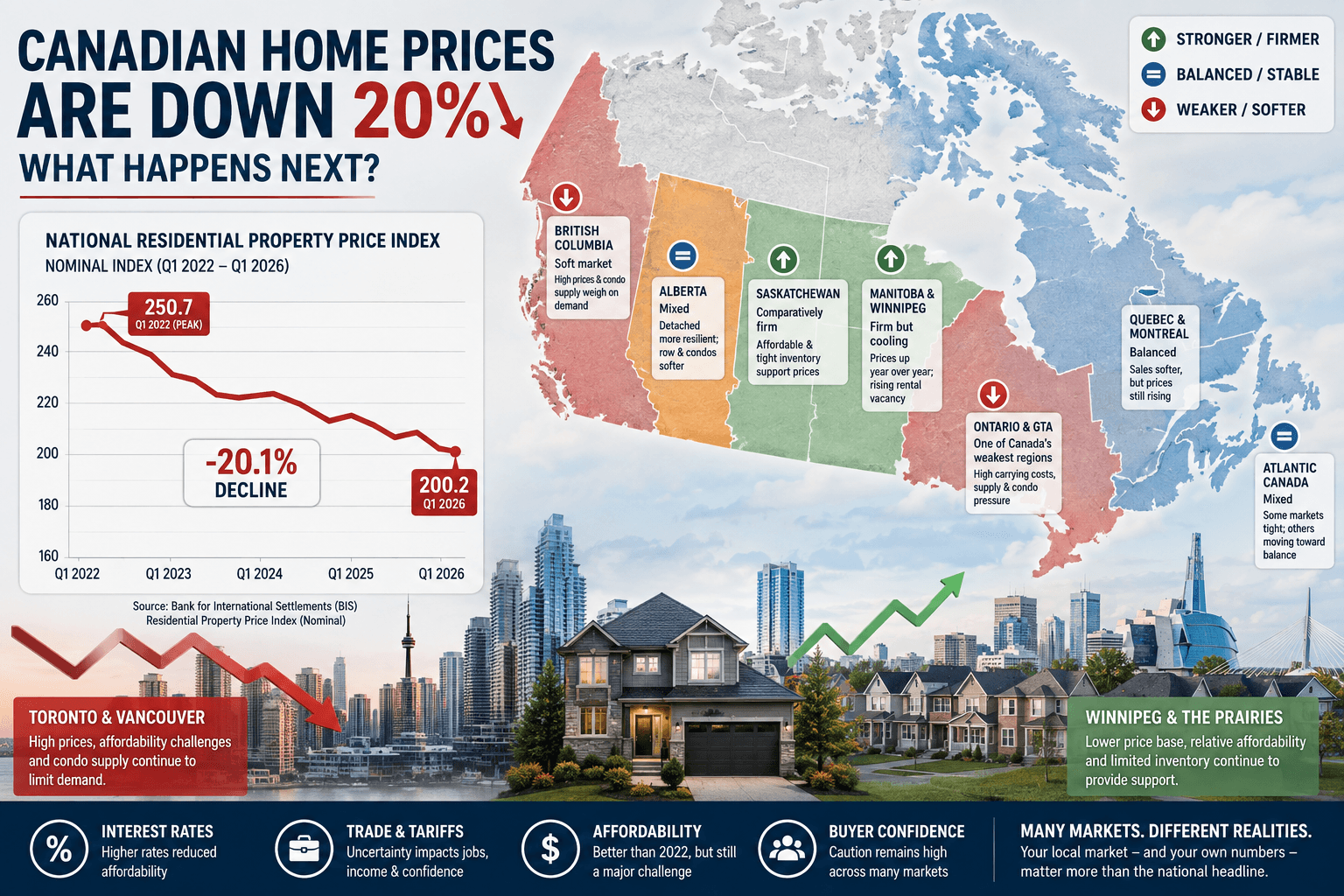
While many major cities are seeing declining rents, some Prairie provinces are moving in the opposite direction. Rental prices in Saskatchewan and Manitoba rose slightly over the past year. This shows strong demand and housing that costs less than in bigger cities. For cities like Winnipeg, this creates an interesting dynamic.
Compared with Toronto or Vancouver, Winnipeg remains one of the more affordable rental markets in Canada. However, population growth and housing demand are gradually pushing rents upward in some neighbourhoods.
This means renters moving from larger cities may view Winnipeg as a more attractive option, increasing demand locally.
What This Means for Renters
For renters, the recent shift in the market could create opportunities that haven’t existed for several years.
Potential benefits include:
More Rental Options
With more units entering the market, renters have more choice than they did during the housing shortage.
Increased Negotiating Power
During the peak rental market, tenants often had to compete aggressively for units. Today, renters may have more room to negotiate pricing or lease terms.
Incentives from Landlords
To attract tenants, some landlords are offering incentives such as:
- One month free rent
- Discounted parking
- Flexible lease terms
However, renters should still be cautious. Even though rents are declining slightly, they remain significantly higher than they were five years ago.
What This Means for Landlords and Property Investors
For landlords, the rental market adjustment means strategy matters more than ever.
Properties that once rented immediately may now sit vacant longer if pricing isn’t competitive.
Landlords should consider:
- Competitive pricing based on current market conditions
- Professional property management
- High-quality maintenance and tenant service
- Strong marketing and listing presentation
In competitive rental markets, tenants choose homes based on more than price. They also evaluate quality, location, and the way the property’s management team runs it.
For property owners in Winnipeg and across Manitoba, working with experienced property managers can help maximize occupancy and maintain stable rental income.
Learn more about Canopy’s property management services
The Outlook for Canada’s Rental Market
Despite the recent decline in rents, most housing experts do not expect a major long-term drop in rental prices.
Canada still faces a housing shortage, and population growth continues to outpace construction in many regions.
The most likely scenario for the next few years is:
- Rental prices stabilizing rather than falling dramatically
- Regional differences between cities
- Continued demand for affordable rental markets like Winnipeg
As new housing supply is absorbed and population growth continues, rents could begin rising again in the longer term.
How Professional Property Management Can Help
For landlords navigating these market changes, professional property management can provide several advantages.
A property manager can help with:
- Pricing units correctly based on market data
- Marketing rental listings effectively
- Screening tenants
- Managing maintenance requests
- Ensuring compliance with landlord-tenant laws
At Canopy, our team helps property owners maximize returns while providing high-quality housing experiences for tenants.
Learn more about our services:
Are rents going down in Canada?
Yes. Average Canada rent prices have declined year-over-year for more than a year, reaching roughly $2,057 nationally in early 2026.
Why are rents decreasing?
Rents are declining mainly due to increased housing supply, smaller unit sizes, slower population growth, and economic factors affecting demand.
Are rents dropping in Winnipeg?
Unlike many major Canadian cities, some Prairie markets including Manitoba have seen modest rent increases due to strong demand and affordability compared with other provinces.
Will rents keep falling?
Experts expect rents to stabilize rather than drop dramatically, especially as Canada continues to face long-term housing shortages.